
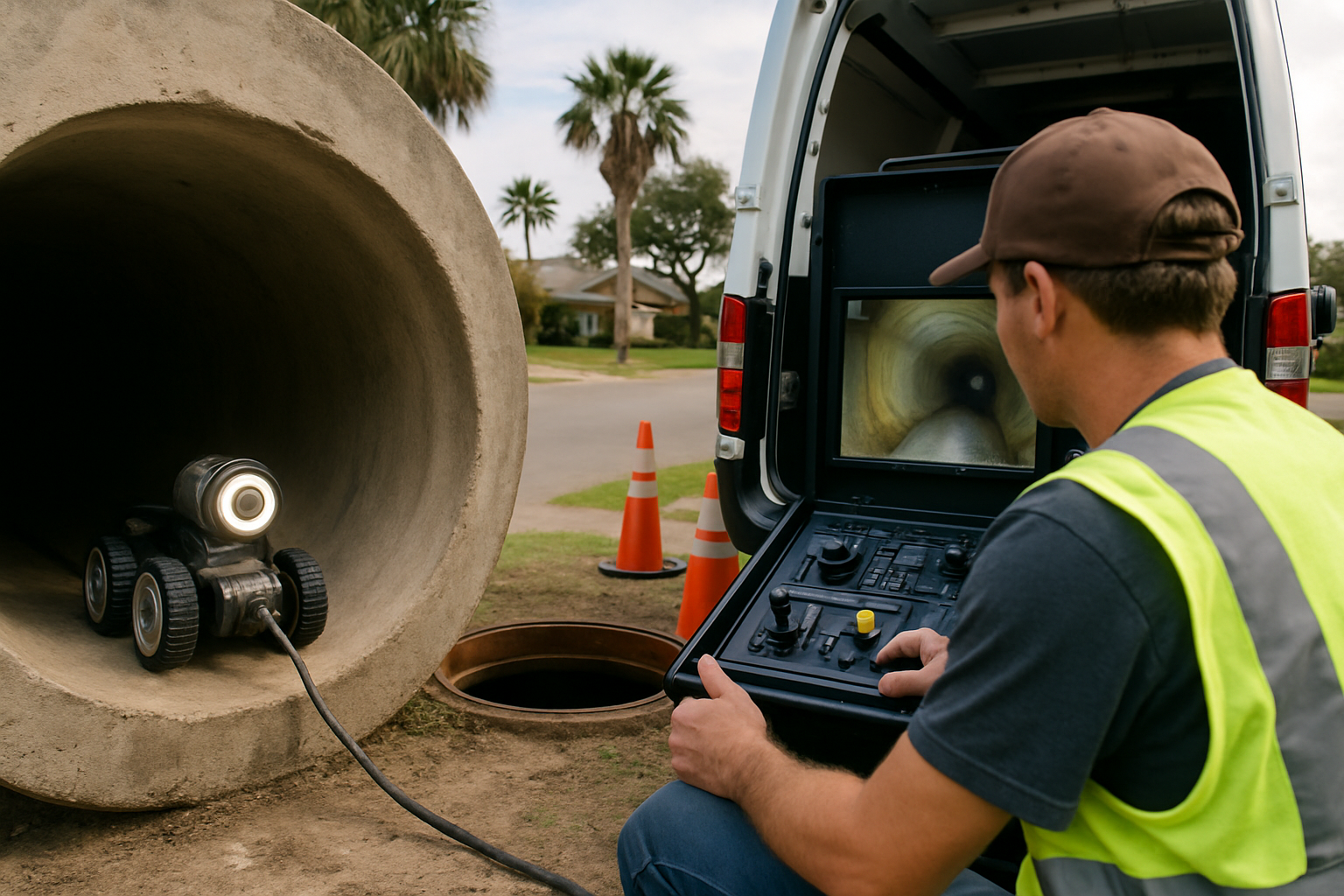
Video Pipeline Inspection & Testing in Corpus Christi, TX
Subtropical Gulf Coast climate.
For video pipeline inspection & testing, the service area covers roughly 100 miles from central Corpus Christi. Urgent requests can be submitted any time; response time depends on the local provider.
Common reasons to call
- Municipal sewer mainline inspection per PACP coding standard
- Pre-purchase or pre-acceptance pipe inspection on a new build
- Hydrostatic pressure testing for a new water or gas line
- Smoke testing for storm-sanitary cross connections or I&I
- Industrial process pipe inspection for refinery, petrochem, or food plant
- Oilfield gathering line video survey or integrity test
- Marine and port discharge line inspection
- Repeat camera inspection after a repair or rehab project
- Lateral inspection from cleanout for property managers and HOAs
- Locate a collapse, root intrusion, grease, or offset joint
Typical work
- Push-rod camera survey of laterals and small-diameter pipe
- Crawler camera with pan-and-tilt head for mainline sewer work
- Sonde location and depth at problem points
- Hydrostatic test setup, pressurize, hold, document
- Smoke test setup, blower deployment, leak mapping
- PACP-coded report with photos, video, and condition grades
- Pre-cure-in-place and post-cure-in-place inspection passes
Typical turnaround
Single-lateral push-rod surveys are often same-day. Mainline crawler work and PACP reporting typically deliver within two to five business days. Smoke and hydrostatic programs run on the project schedule.
Materials and equipment
- Push-rod and self-leveling pan-tilt crawler cameras
- Tracked transporter for 6 inch to 36 inch pipe
- Sondes, locator wands, and depth meters
- Hydrostatic test pumps, gauges, and isolation plugs
- Smoke blowers and non-toxic smoke fluid
- PACP report software and video archiving
- Confined space entry equipment if entry is required, otherwise remote only
Job sizes
Minor
Single lateral push-rod survey with same-day report
Standard
Mainline crawler camera survey of one segment with PACP coding
Major
Multi-segment municipal contract, smoke testing program, or hydrostatic acceptance testing for a new install
Replacement
Pre and post inspection passes around a cure-in-place rehab or pipe burst project
Final pricing comes from the on-call provider after on-site assessment, with a written estimate before any work starts.
What to expect
- ✓NASSCO PACP, MACP, or LACP certified operators on coded municipal work
- ✓OSHA 10 or 30 and confined space entry training carried for crew
- ✓TWIC available for port and refinery deployments
- ✓Video archive and PACP report delivered as standard scope
- ✓Hydrostatic and smoke testing run to the project standard, not improvised
NASSCO PACP, MACP, and LACP certifications, OSHA 10 or 30, confined space entry training, TWIC card for port and refinery work, general liability insurance, video archive and report deliverable per project requirement.
Common questions
What is a PACP report?
PACP stands for Pipeline Assessment Certification Program. It is the NASSCO industry standard for coding the condition of sewer pipe with specific defect codes, severity grades, and footage from the launch point. Many municipalities and engineers require it.
What size pipe can you inspect?
Push-rod cameras work well for two-inch to six-inch laterals. Crawler cameras handle six-inch through thirty-six-inch and larger with the correct tractor. Specialty equipment is available for very small or very large pipe.
Do I need a plumbing license for the work?
Video inspection itself does not require a Texas plumbing license. Any plumbing modification, replacement, or repair triggers TSBPE licensing rules and is a separate scope.
Can you locate a blockage or offset joint?
Yes. The camera head carries a sonde, and a locator wand at the surface marks the position and depth. Engineers and contractors use that to dig precisely instead of guessing.
What is smoke testing for?
Smoke testing finds inflow and infiltration into a sanitary collection system, cross connections, illegal storm tie-ins, and broken cleanouts. A blower pushes non-toxic smoke into the line and the survey crew maps surface emissions.
What is hydrostatic testing?
Hydrostatic testing pressurizes a new pipe with water and holds it at a target pressure for a set time. It proves integrity before a new line is accepted by the utility or owner.
Do you handle industrial and oilfield pipe?
Yes. The same camera platforms work for process piping, oilfield gathering lines, and discharge lines, subject to the customer's MOC, hot work, and confined space rules. TWIC and OSHA 30 are common requirements on those sites.
What deliverables do we get?
Video file, photo snapshots at coded defects, a PACP report where applicable, and a written summary of findings and recommendations. Confidentiality agreements are supported for sensitive industrial work.
Coastal Bend seasons
Spring (March - May)
Heavy rainfall exposes inflow and infiltration. Smoke testing programs ramp up.
Summer (June - August)
Drought stress and ground movement can shift joints and laterals. Mainline survey volume is steady.
Fall (September - November)
Pre-budget capital planning brings condition-assessment contracts before fiscal year close.
Winter (December - February)
Lower precipitation lets crews work confined and entry-restricted segments more efficiently.